Ukraine is moving from harmonising legislation to implementing European standards for farm animal welfare.
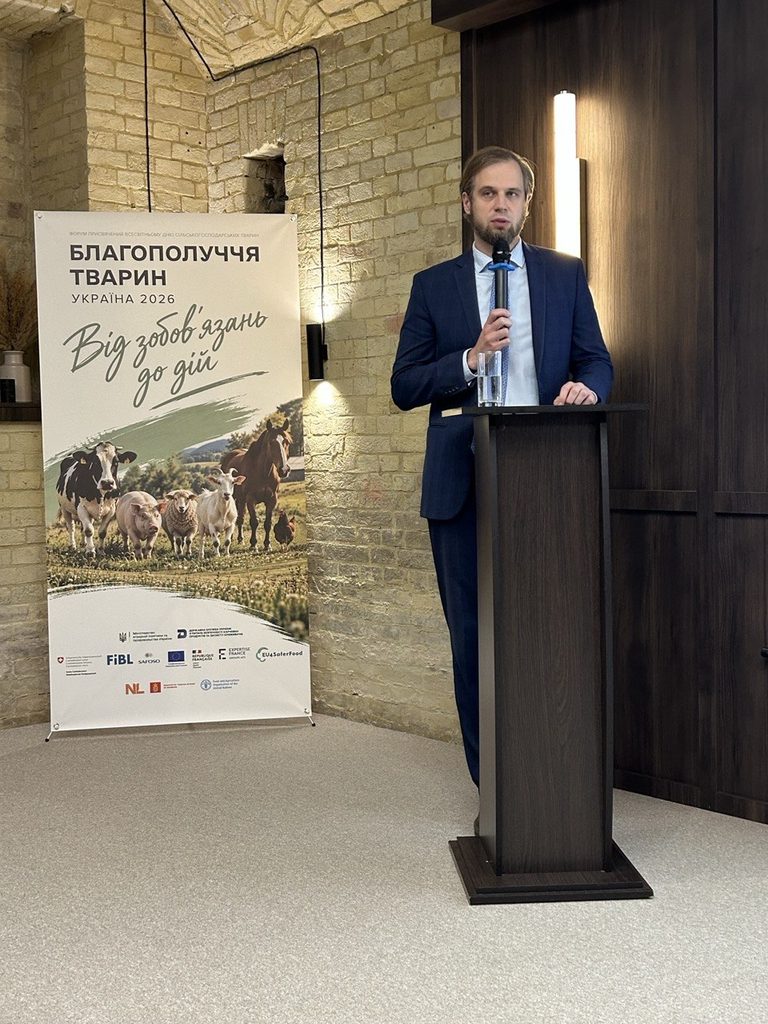
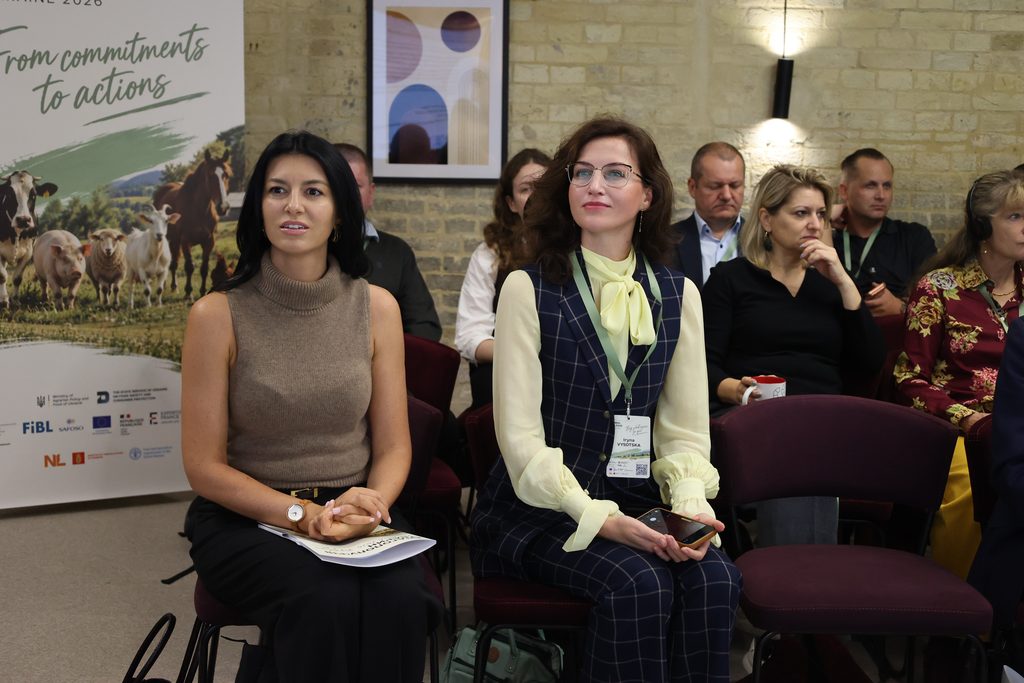
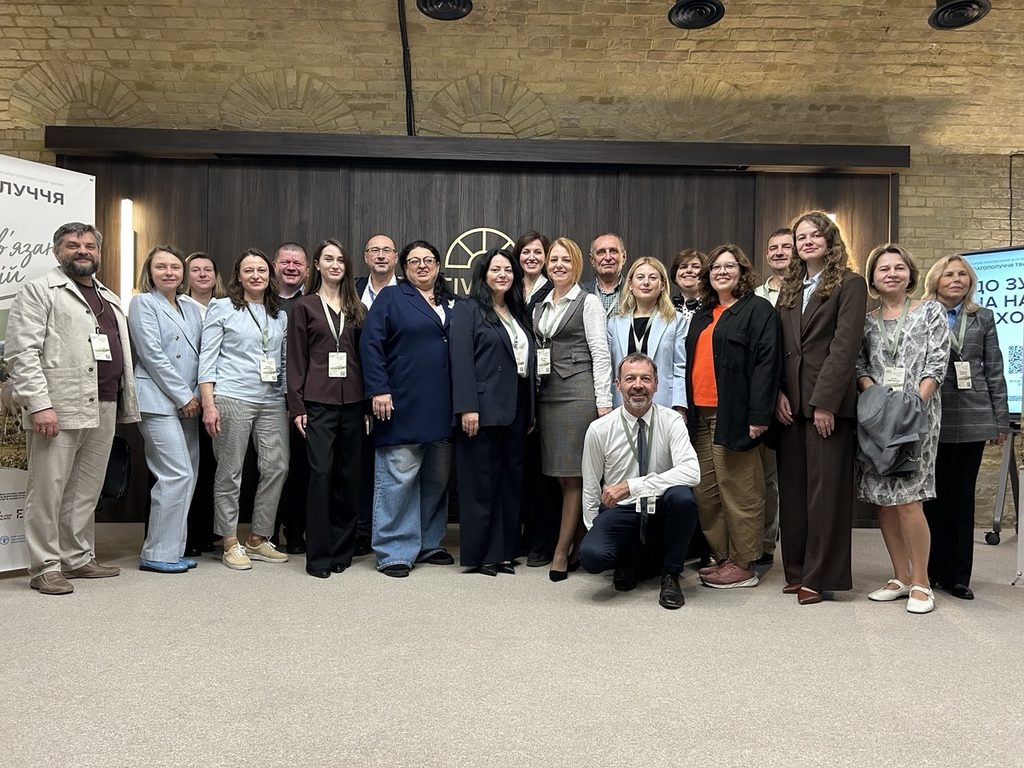
This topic was discussed at the forum “Animal Welfare – Ukraine 2026: From Commitments to Action,” which brought together more than 830 participants in a hybrid format. The event was held for the third time as part of a global initiative marking World Farm Animal Day.
Participants reviewed the implementation of the 2025–2027 Roadmap, exchanged practical experience, and identified the sector’s priority needs for further support from international partners.
“European integration is not only about adopting the necessary legislation and bringing our regulations closer to European Union law. Above all, it is about concrete changes that must work in practice. In the area of farm animal welfare, we already have clear commitments and have identified the necessary steps in the Roadmap through 2028. Our task now is to ensure consistent implementation—from preparing government authorities and market operators to effective enforcement and day-to-day compliance with the requirements. It is fundamentally important for us that European standards become part of everyday practice in Ukrainian livestock farming. This is precisely what moving from commitments to action means. This is how we are building a system compatible with European standards,” said Taras Vysotskyi, Minister of Agrarian Policy and Food of Ukraine.
During his speech, Denys Bashlyk, First Deputy Minister of Agrarian Policy and Food of Ukraine, highlighted the positive transformation in how Ukrainian businesses perceive European standards: “Just 8–9 months ago, farmers viewed animal welfare as a formal requirement of European integration. Today, we are seeing tremendous progress: the formalistic approach is disappearing even among small and medium-sized producers. Our main task now is to move from theory to practice, drawing on the experience of our European partners, particularly France, which has already completed this journey.”
Serhii Tkachuk, Head of the State Service of Ukraine on Food Safety and Consumer Protection, noted that compliance with European approaches will help expand the export potential of Ukrainian agribusiness and enable access to new international markets.
The two-day forum programme covered EU countries’ experience and practical developments by Ukrainian businesses. The first day focused on public policy, veterinary control and staff training in France, as well as the experience of leading Ukrainian companies. On the second day, participants focused on the readiness of Ukrainian government authorities and market operators to comply with the new requirements. Representatives of industry associations in the dairy, pig farming, poultry, sheep farming, goat farming and meat sectors discussed the role of professional associations in preparing producers.
Vidmantas Paulauskas, Head of the EU4SaferFood Project, and Manon Schuppers, international expert of the QFTP programme, highlighted Ukraine’s significant progress and confirmed their readiness to continue supporting the development of the official control system, strengthening the capacity of competent authorities, and providing training for farmers.
The event was held under the patronage of the Ministry of Agrarian Policy and Food of Ukraine, in cooperation with the State Service of Ukraine on Food Safety and Consumer Protection, with the support of:
• Switzerland, within the Swiss-Ukrainian programme “Quality Food Trade Programme” (QFTP) aimed at developing higher value-added trade in Ukraine’s organic and dairy sectors. The programme is implemented by the Research Institute of Organic Agriculture (FiBL, Switzerland) in partnership with SAFOSO AG (Switzerland);
• France, within the project for the deployment of highly qualified experts to Ukraine, funded by the French Ministry for Europe and Foreign Affairs, implemented by Expertise France and involving experts from the French Ministry of Agriculture, Agri-Food and Food Sovereignty; European Union, within the “Improvement of Legislation, Control and Awareness in the Areas of Food Safety, Animal Health and Welfare, and Phytosanitary Measures in Ukraine” (EU4SaferFood) project; in partnership with the Delegation of the European Union to Ukraine, the Embassy of the Kingdom of the Netherlands in Ukraine, the Embassy of Denmark in Ukraine, and the Food and Agriculture Organisation of the United Nations (FAO).